

Endless service innovation, future cooperation enterprising
Aluminum Alloy Die Casting Technology and Its Wide Applications in Modern Manufacturing
Release time:
2024-01-22
As energy crises and environmental issues become increasingly prominent, the manufacturing of waste-heat recovery heat exchangers has emerged as a crucial approach in industrial production for energy conservation, emission reduction, and improved energy utilization efficiency. Thanks to their advanced design concepts and highly effective heat-exchange performance, these devices play an indispensable role in numerous industrial processes. The primary function of waste-heat recovery heat exchangers is to efficiently capture and reuse the waste heat generated during industrial production. Through ingeniously designed heat-exchange structures, they convert the heat contained in high-temperature exhaust gases, wastewater, or solid wastes—normally released into the environment—into usable thermal energy resources. This not only significantly reduces enterprises’ energy consumption costs but also minimizes thermal pollution of the environment. Take, for example, the distillation process in the chemical industry: after completing a chemical reaction, the reactor typically discharges large volumes of high-temperature exhaust gases containing substantial thermal energy. This is precisely where waste-heat recovery heat exchangers come into play. By carefully designing appropriate flow paths and selecting effective heat-transfer materials, these exhaust gases transfer their abundant thermal energy to cold feedstocks entering the next processing stage, preheating them to the optimal reaction temperature. As a result, not only is energy consumption reduced when heating new feedstocks, but the environmental impact of waste heat is also greatly mitigated—a win-win situation. Similarly, in the power industry, combustion...
As energy crises and environmental issues become increasingly prominent, the manufacturing of waste heat recovery heat exchangers has emerged as a crucial approach in industrial production for energy conservation, emission reduction, and improved energy utilization efficiency. Thanks to their advanced design concepts and effective heat exchange performance, these devices play a pivotal role in numerous industrial production processes.
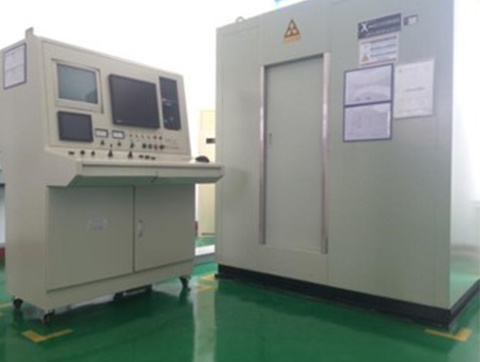
The primary function of waste heat recovery heat exchangers is to effectively capture and reuse the waste heat generated during industrial production processes. Through a cleverly designed heat exchange structure, these devices convert the heat contained in high-temperature exhaust gases, wastewater, or solid waste that would otherwise be discharged into the environment into usable thermal energy resources, thereby significantly reducing enterprises’ energy consumption costs and minimizing thermal pollution to the environment.
Take the distillation process in the chemical industry as an example: after a chemical reaction is completed in a reactor, a large volume of high-temperature exhaust gas is discharged. This is precisely where a waste heat recovery heat exchanger comes into play. By designing appropriate flow channels and selecting effective heat-transfer materials, the substantial thermal energy contained in these exhaust gases is transferred to the cold feedstock entering the next process step as it passes through the heat exchanger. In this way, the feedstock is preheated to the optimal reaction temperature—saving energy that would otherwise be required to heat fresh feedstock and reducing the environmental impact of waste heat at the same time. It’s a win-win solution.
Similarly, in the power industry, the flue gas temperature from boilers in coal-fired power plants typically reaches several hundred degrees Celsius. If this thermal energy were simply released into the atmosphere, it would result in tremendous energy waste. Waste heat recovery heat exchangers can capture the heat contained in this high-temperature flue gas and convert it into steam, which can then be used to drive steam turbines for power generation or fed into heating systems. As a result, the overall energy utilization rate of the power plant is significantly improved, enabling a circular economy model.
Overall, waste heat recovery heat exchangers—being key technological equipment for energy conservation and emission reduction in industrial production—when widely adopted not only help enterprises reduce costs and enhance economic benefits, but also serve as an important scientific and technological support for promoting China’s green and low-carbon development and achieving the “dual carbon” goals. With continuous innovation and improvement in technology, waste heat recovery heat exchangers will in the future demonstrate their unique value and potential in an even wider range of industries and applications.
Related news

Contact Us
Add:No.380,Zhengyang Road,Chengyang District,Qingdao
Tel.:+86-13864296376
Email:panchao@brilliantqd.com
Skype:panchao.pch@163.com
whatsapp:+8613864296376
copyright © 2022 QINGDAO BRILLIANT MACHINERY